← Career exploration

Finance in an AI & climate economy

Updated July 2026 · ~12 min read · For students, graduates & early professionals

⚡ Watch the 60-second version 🎯 Find your role
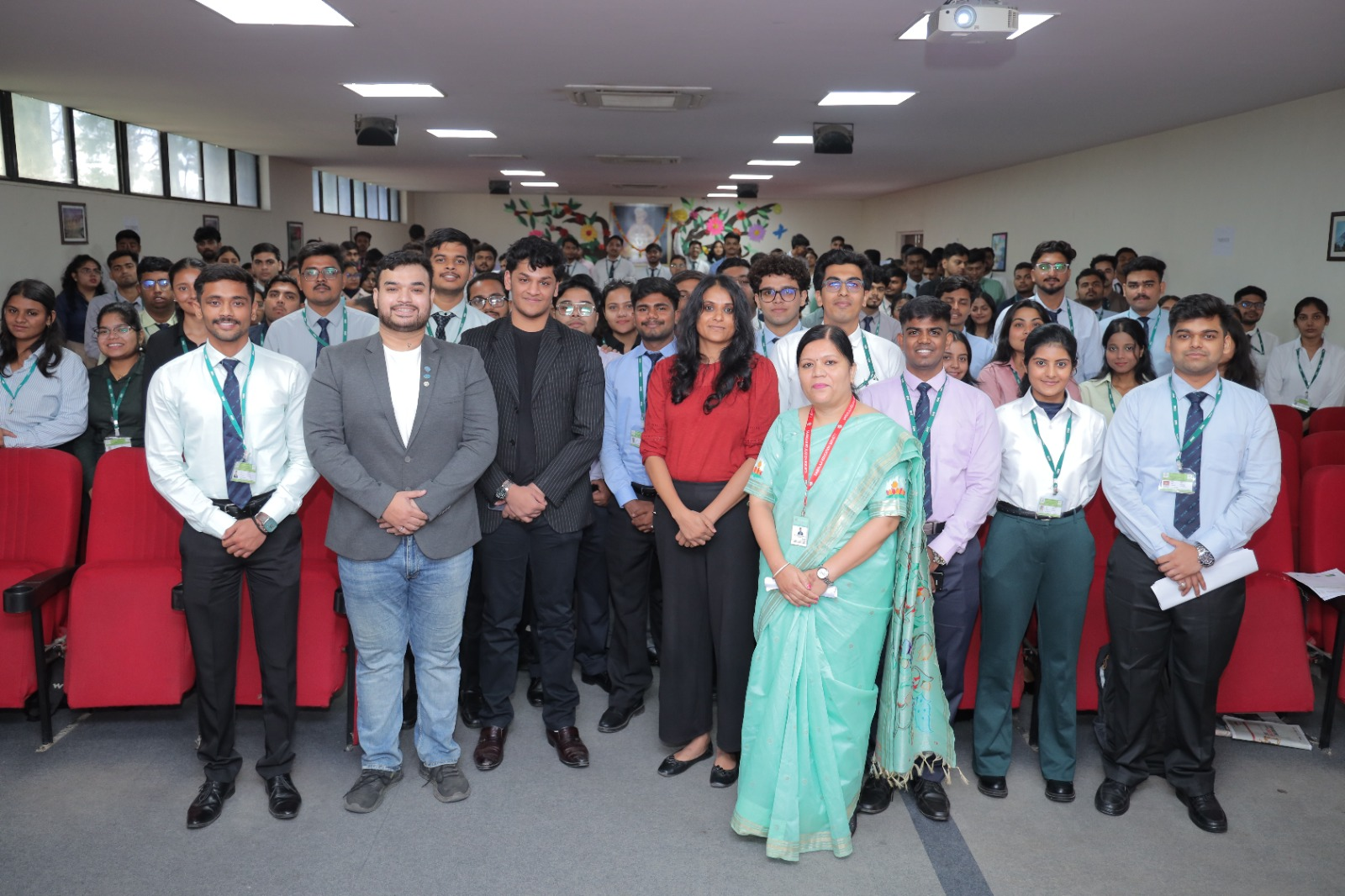
Shwetha Munegowda speaking with PGDM students at Sai Balaji Group of Institutes
Why this guide

When I spoke with PGDM students at Sai Balaji Group of Institutes, one question kept coming up: "I'm studying finance. Do I need to learn AI? Do I need to learn sustainability?" My answer was simple — keep becoming a great finance professional. But also understand how AI and climate change are changing the world you'll work in. This guide is a starting point for that.

Not hype — what's actually happening

How AI is changing finance

The pattern across all of this: AI is very good at producing the first draft. It is not good at deciding what's material, defending a number to an auditor, or reading the room in a negotiation.

Ratio analysis & reconciliations
What took a junior analyst a full day now takes minutes with AI-assisted tools in Excel, Power BI and modern ERPs. The job shifts from producing numbers to explaining what they mean.
Credit & risk scoring
Increasingly blends traditional ratios with AI models reading alternative data — especially relevant for lending to MSMEs and farmers with thin formal credit history.
Fraud detection & audit sampling
Moved from checking a random 5% of transactions to AI flagging the riskiest ones for a human to review.
Investor & board reporting
AI can draft the first version of commentary from the numbers. Your edge is judgment — knowing which number actually matters this quarter, and why.

Regulation and capital flows, not theory

How climate is changing finance

India's climate disclosure regime is becoming mandatory
SEBI's BRSR applies to the top 1,000 listed companies with quantitative KPIs; BRSR Core assurance is required for the top 150, with phased expansion planned. RBI has been developing a climate risk disclosure framework for banks and NBFCs.
Green finance is now a regulated asset class
RBI's green deposits framework (effective FY 2023–24) requires verified allocation to renewable energy projects. SEBI has its own rules for ESG-labelled funds and bonds — someone needs to structure, verify and report on these.
Banks are discovering a data gap
A March 2026 assessment of 30+ major Indian banks found only 3 had disclosed financed-emissions data and only 2 had a formal coal exclusion policy. That gap is a hiring opportunity.
Carbon credits are becoming a financial instrument
Verified emission reductions are now treated as a tradeable asset with their own accounting, valuation and audit questions.

What employers actually list — from real job postings

Skills whose value is increasing

These aren't guesses — they're pulled from what climate risk, ESG and sustainable finance roles in India and globally actually ask for, named specifically rather than kept generic.

Technical

Advanced Excel — still the most listed skill
Across real climate risk and ESG job postings in India, Excel is the single most frequently named tool, even ahead of newer software — data modelling, pivot analysis, and scenario building all run on it first.
SQL, and Python or R
Increasingly listed even for analyst-level roles — "working level familiarity" with SQL and exposure to Python is now a stated requirement at institutions like EBRD, not just a nice-to-have.
Data visualisation — Power BI or Tableau
Named specifically in postings for turning climate and ESG data into something a board or investor can actually read at a glance.

Behavioural

Translating technical findings into plain language
Real job descriptions ask for this explicitly — "explaining Scope 3 emissions in simple terms," writing board-ready briefing notes, executive communication with clarity and brevity. This is tested directly in interviews, not assumed.
Cross-functional collaboration
Climate and ESG data doesn't sit in one department — postings consistently require working across risk, finance, operations and sustainability teams at once to actually get the numbers.
Staying current, as a stated job requirement
Frameworks genuinely change year to year — PCAF released a new global standard as recently as December 2025. Job descriptions explicitly list "keeping up-to-date with evolving regulations" as an ongoing duty, not a one-time qualification.

Green & climate-specific

GHG Protocol — Scope 1, 2 and 3 accounting
The base language underneath every other framework here. Scope 3 in particular — emissions from a company's value chain, not its own operations — is where most of the real complexity and most of the jobs sit.
PCAF — financed emissions
The actual global standard banks and investors now use to calculate the emissions tied to their loans and investments — over 700 financial institutions worldwide follow it. If a lender finances 20% of a company's debt, PCAF is the method for calculating their 20% share of that company's emissions. Directly relevant to Credit Analyst and Climate Risk Analyst roles.
TCFD and ISSB (IFRS S1 & S2) disclosure frameworks
What most climate-related financial disclosures are actually built against, named specifically in nearly every ESG and climate risk posting reviewed for this guide.
Climate scenario analysis using NGFS scenarios
How risk teams actually model "what happens to this portfolio if carbon prices rise" or "if a flood hits this region" — the NGFS (Network for Greening the Financial System) scenarios are the standard reference point named in real climate risk job descriptions.

What you can apply for — and what's next

Roles now, and roles emerging

Roles now
Finance / FP&A Analyst
Budgets, forecasts, variance reports — increasingly AI-assisted for the first draft.
Accounts Executive
Day-to-day bookkeeping, reconciliations, compliance filings.
Credit Analyst
Assesses borrower risk; now starting to factor in climate exposure of the sector.
ESG Reporting Associate
Supports a company's BRSR filing, pulling data from operations into the disclosure format.
Roles emerging
Climate Risk Analyst
Translates climate exposure into credit and portfolio risk as RBI's framework finalises.
Carbon Finance Analyst
Values, verifies and accounts for carbon credits as a financial asset.
Sustainable Finance Specialist
Owns green bond and green deposit structuring and compliance.
ESG Reporting & Assurance Analyst
BRSR Core assurance as it phases in for more companies each year.

Where finance fits

Industries to explore

This isn't only about "green" companies. Climate is reshaping finance work inside manufacturing, retail, agriculture and real estate too — often through cost and compliance, not mission.

ESG Consulting
Why growingRegulation is expanding required disclosures; most companies lack in-house expertise.
Where finance fitsTranslating sustainability data into business and financial terms.
Example rolesESG Analyst, Sustainability Reporting Associate, Climate Risk Consultant
Carbon Markets
Why growingIndia has 1,400+ carbon projects registered under Verra and Gold Standard, with a domestic Indian Carbon Market being built alongside them.
Where finance fitsValuing credits, structuring project finance, managing accounting and audit trail.
Example rolesCarbon Finance Analyst, MRV Associate, Carbon Trading Analyst
Renewable Energy
Why growingCapacity targets require large amounts of project finance and structured debt.
Where finance fitsProject finance analysis, green bond structuring, PPA financial modelling.
Example rolesProject Finance Analyst, Renewable Energy Investment Associate
Banking & NBFC Climate Risk
Why growingRBI's disclosure framework is pushing banks to build this capability from a low starting point.
Where finance fitsThis is a finance role — credit risk with a climate lens.
Example rolesClimate Risk Analyst, Sustainable Lending Associate
Manufacturing & Exports
Why growingThe EU's carbon border tax (CBAM) entered its definitive phase in January 2026 — steel, aluminium, cement and fertiliser exporters now face real carbon-linked costs, and India's steel exports to the EU have already declined.
Where finance fitsPricing carbon into export costs, verifying emissions data for compliance, managing MSME cost-relief schemes.
Example rolesExport & Trade Finance Analyst, Carbon Cost Analyst
FMCG & Retail Supply Chains
Why growingBRSR pressure is pushing large brands to account for emissions across thousands of suppliers, not just their own operations — most of it currently untracked.
Where finance fitsSupplier-level carbon cost allocation, sustainable sourcing budget planning.
Example rolesSupply Chain Finance Analyst, Sustainable Sourcing Analyst
Real Estate & Green Buildings
Why growingGreen certification and climate risk (flooding, heat) are starting to affect financing terms and valuations on commercial property.
Where finance fitsGreen building project finance, climate-adjusted valuation and lease structuring.
Example rolesReal Estate Finance Analyst, Green Building Finance Associate
Agribusiness
Why growingAgricultural carbon credit projects and climate-risk-aware lending are expanding, especially through Farmer Producer Organisations.
Where finance fitsStructuring carbon project finance for FPOs, building climate risk into agri-lending.
Example rolesAgri Finance Analyst, Rural Carbon Project Analyst
Who's actually ahead — not just who's big

Companies to explore

A starting point, not an endorsement — always verify current openings and standing directly.

Each entry has a tag showing who it's actually realistic for right now: Fresher entry means a structured path exists for someone straight out of college; Lateral / 1–2 yrs means it's more realistic after some experience elsewhere; Explore first means it's worth knowing about now even if applying is a few years off.

Banks — ranked by who's actually disclosing, not just who's biggest

State Bank of India (SBI) Lateral / 1–2 yrs
Has deployed over ₹47,000 crore to renewable energy financing, backing roughly 19 GW of capacity. Entry-level banking roles hire fresh; the ESG/green finance desk specifically is more realistic after a couple of years in core banking or credit.
HDFC Bank Lateral / 1–2 yrs
One of the few Indian banks to actually report a lending-book emissions figure — 12.2 million tonnes CO2e from a sampled portion of its book. Same pattern as SBI: enter through mainstream banking first.
Federal Bank Explore first
The only Indian bank with a full green loan portfolio breakdown by category. Worth following for what good disclosure looks like, even before you're ready to apply anywhere.
RBL Bank Explore first
One of only three Indian banks that formally support TCFD — a genuine outlier on climate governance.

Green energy financiers — finance-specific employers, not power companies

IREDA Fresher entry
A government-backed renewable energy financier — closer to a specialist green bank than a power company. Runs an Executive Trainee (Finance & Accounts) programme with campus interviews (most recently at ICAI Bengaluru) — a genuine, structured door in for finance graduates.
REC Limited & Power Finance Corporation (PFC) Fresher entry
Government-backed NBFCs leading long-term debt financing across India's power sector. PFC recruits Officer/Deputy Officer grades through GATE-linked and campus processes specifically for engineering-plus-MBA/PGDM-Finance candidates — a structured, exam-based path, not "check their careers page and hope."

Circular economy & waste management

Recykal, Attero, Banyan Nation Lateral / 1–2 yrs
Real, funded companies — Recykal (Hyderabad, $44.5M raised, digital waste marketplace), Attero (e-waste and battery recycling, backed by IFC), Banyan Nation (recycled plastics used by Unilever and Tata Motors). Very different finance work than banking: working capital cycles, EPR compliance economics, materials pricing. Startups like these generally hire lean and through direct outreach rather than formal graduate programmes — a sharp cover note beats waiting for a listed opening.

Climate tech venture capital

Avaana Capital Explore first
India's first and largest early-stage climate-tech VC fund — $135M, backed by the Green Climate Fund. This is deciding where climate money goes, not accounting for it afterward — a genuinely different path from everything else in this guide. VC firms rarely hire straight out of college; realistically a 3–5 year target after building analyst experience in banking, consulting or a startup first.

Policy & research think tanks

CEEW — Council on Energy, Environment and Water Explore first
Not a "finance job" in the traditional sense, but hires finance-literate analysts for energy economics and policy modelling — a real but different path if numbers-with-a-policy-angle appeals more than corporate finance.

Carbon markets, consulting & international

Large / Listed Explore first
EKI Energy Services (BSE-listed, India's best-known carbon credit developer by name — though its revenue and stock have fallen sharply since 2023, a real lesson in how volatile this market still is)
Growth & startups Lateral / 1–2 yrs
Breathe ESG — Bengaluru-founded, VC-backed ESG data platform used by companies like WeWork and Embassy Group · CostMos — Bengaluru carbon and cost consultancy
Consulting Fresher entry
Deloitte, EY, KPMG, PwC ESG practices typically run large structured campus recruitment — one of the more reliable fresher entry points into this space · boutique carbon & ESG consultancies tend to hire laterally instead
International Lateral / 1–2 yrs
UNDP India (SDG financing) · International Finance Corporation (IFC) — both typically look for some prior work experience even at "entry" grades

Verify current openings and standing directly before applying — bank rankings, company positions and entry-point tags reflect one point-in-time assessment, not a permanent scorecard.

Curated, not exhaustive

Learning hub

Free courses

Carbon Markets (Class Central directory)
Curated, continuously updated list of free carbon market courses.
Beginner
The Carbon Credit Course
Fully free, self-paced — climate basics through project development and careers.
Beginner
Climate Finance (Imperial College, via edX)
Free, self-paced, ~20 hours — video lectures and practitioner interviews.
Intermediate
Sustainable Finance for Climate & Energy (UNDP SDG Finance Academy)
Green bonds, carbon markets, climate finance mechanisms.
Beginner
Good starting point if sustainability concepts themselves are new to you — covers core ideas like ecological footprint before you get into the finance-specific frameworks above.
Beginner

Certification

CFA Institute — Sustainable Investing Certificate
No formal entry criteria, ~100–130 study hours. The most globally recognised credential specifically for ESG-in-finance.
Intermediate

Podcasts

The Sustainability Story (CFA Institute)
Hosted by CFA charterholders — how ESG intersects with investment analysis.
Beginner–Int.
Sustainability Karma (All India Radio)
India's first sustainability talk show, with Indian policy and business context.
Beginner
All Things Sustainable (S&P Global)
Weekly business-angle interviews with global sustainability and finance leaders.
Intermediate
ESG Currents (Bloomberg Intelligence)
Shorter, markets-focused episodes on ESG, climate risk and green bonds.
Intermediate

Newsletters & communities

ESG News
Free daily digest of ESG policy, climate finance and corporate sustainability news.
Beginner
Climate Tech VC (CTVC)
Weekly roundup of climate policy and investment trends.
Intermediate
Sustainability Simplified (Tim Mohin)
A curated five-story weekly email from GRI's former CEO.
Beginner
Crowdsourcing Sustainability
Free global community (newsletter + Slack) for students and early professionals.
Beginner

Verify each link is still active before relying on it — resources are reviewed periodically, not guaranteed permanent.

Where they help, where judgment stays essential

AI tools for finance

Spreadsheet AI (Excel Copilot, Sheets AI)
Good for first-draft variance analysis and formula logic. Always verify against source data.
Power BI Copilot
Now lets you ask a question in plain English — "what's driving the variance in Q3" — and get back a chart, a written explanation, and even a suggested DAX formula, instead of building the visual by hand. Since Power BI itself is the most commonly named reporting tool in real finance and ESG job postings, this is worth learning early rather than after you're hired.
General AI assistants
Useful for understanding a new SEBI circular quickly or drafting a first report version. Not a substitute for reading the primary source before relying on it professionally.
Where human judgment stays essential
Materiality decisions, stakeholder communication, anything with legal or audit sign-off. AI accelerates the first draft; it can't take responsibility for the final number.

Start small

One-hour challenge

1. Read SEBI's plain-language summary of BRSR Core (30 min). 2. Read one recent news article on how India's carbon credit market has performed over the past two years — including its ups and downs (20 min). 3. Write three questions you'd ask a Climate Risk Analyst (10 min).

15–20 minutes a day

30-day learning path

Week 1
Read this guide fully. Skim the CFA Institute syllabus. Watch one free carbon markets video.
Week 2
Read SEBI's BRSR overview and RBI's climate risk framework summary.
Week 3
Pick one industry. Research two companies. Follow one person working in the space. Separately, download Power BI Desktop (free) and build one simple report from a sample dataset — this is the single most-named tool in real postings, worth 2–3 hours now.
Week 4
Start the free Climate Finance or Carbon Credit course. Draft a LinkedIn line about it.

Downloadable

Career exploration checklist

I understand how AI is changing day-to-day finance work
I understand what BRSR and RBI's climate framework require
I've identified 2–3 skills to build in the next 6 months
I've researched 3 companies I'd want to work for
I've completed at least one free course or module
I've had one real conversation with someone in this space
Get the tracker

Take the 30-day path with you

A printable version of this tracker, plus a heads-up the moment we publish the next guide.

Frequently asked

Questions students ask

Do I need an ESG certification to work in this space?
Not to start. A finance degree plus curiosity is enough for entry-level roles. A certification becomes valuable once you're targeting ESG-specific or climate risk roles.
Can I enter without prior sustainability experience?
Yes. Most people in Indian climate finance today came from mainstream finance, banking or audit backgrounds and picked up the climate layer on the job.
What salary trends exist?
This varies too much by company, city and role to state reliably here — verify against current postings for the specific role and city you're targeting.
Can I transition later, after a few years in traditional finance?
Yes — it's common. Modelling, valuation and risk skills transfer directly; the climate/ESG layer is the smaller piece to add.

Verify anything yourself

References

Every framework, statistic and company named in this guide traces back to one of these sources. Nothing here is invented — if a claim matters to a decision you're making, check it against the primary source directly.

SEBI — BRSR & BRSR Core disclosure requirements (sebi.gov.in)
RBI — Climate risk disclosure framework and green deposits framework (rbi.org.in)
PCAF — Partnership for Carbon Accounting Financials, Global GHG Accounting Standard (carbonaccountingfinancials.com)
GHG Protocol — Scope 1, 2 and 3 accounting standards (ghgprotocol.org)
TCFD / ISSB — Climate-related financial disclosure frameworks, IFRS S1 & S2 (ifrs.org)
NGFS — Network for Greening the Financial System, climate scenarios
European Commission — Carbon Border Adjustment Mechanism (CBAM)
CFA Institute — Sustainable Investing Certificate
Class Central, Carbon Credit Course, Imperial College Business School (via edX), UNDP SDG Finance Academy
Basics of Sustainability: Learn in Simple Language — Udemy course by Dhananjay
EKI Energy Services Ltd. — public financial filings
Breathe ESG, CostMos — company profiles
Earth5R ESG Intelligence — Indian banks climate disclosure assessment, March 2026
SBI, HDFC Bank, Federal Bank, RBL Bank — public sustainability disclosures and reporting
IREDA, REC Limited, Power Finance Corporation — public financing data and recruitment notifications
Recykal, Attero, Banyan Nation — company profiles and funding records
Avaana Capital — public fund and portfolio disclosures
CEEW (Council on Energy, Environment and Water) — public partnership records